

The Story
The Story of Path Mosaic
by Beata Kaczkowska
The story of Path Mosaic started in 2014, more than a decade before most organizations began implementing generative AI.
For over ten years, I've designed automated systems, intelligent workflows, and self-service tools, primarily in multifamily housing and the public sector. These solutions increased operational efficiency and effectiveness and transformed the customer and employee experience.
Throughout these projects, I repeatedly encountered frustrations with the constraints of process automation. Over time, I came to realize that many of them were not specific to any one organization or industry. They stemmed from the human and technological limitations of the time.
Dropdown Lists
Frontline employees collected extensive information while responding to customer inquiries and processing customer requests. To automate the processes, we had to standardize the intake. To standardize it, we had to structure it around dropdown lists, checkboxes, and predefined fields. Unusual issues, complex cases, and unique needs did not fit the categories.
The solutions I designed and implemented increased productivity and improved experience. But they generated services and recommendations for a category, not an individual. The more effectively we standardized the process, the less room it left for human uniqueness and complexity.
One-Size-Fits-All Solutions
Organizations also rely on standardization and aggregation outside of process automation.
ADA apartments for persons with disabilities are designed to accommodate a broad range of accessibility needs and provide tremendous value. Yet disability is not a single experience. A home designed to address a wide range of potential needs may not fully align with the specific challenges of a particular resident. Features that are essential for one person may be unnecessary or even create an obstacle for another, while other needs remain unaddressed.
Employee support often works the same way. Tools and resources are designed for a role, department, or team. Two team members in the same role could have different expertise, talents, and challenges. Support designed for a category often fails to address the needs of an individual employee.
Aggregation and simplification were not unique to any domain. They were a practical consequence of trying to serve customers at scale.
Individualized Service
At the same time, I could see the value of individualized service everywhere.
People stood in line on walk-in days. Callers waited on hold. They were not waiting for a category-based solution. They were waiting to speak with a customer service associate who could understand their unique and complex challenges and help them resolve their issue successfully. Employees were able to provide that individualized assistance through one-on-one interactions with customers.
The problem was that individualized service depended on limited human time, capacity, expertise, and memory. Even the most knowledgeable and dedicated employee could help only a limited number of people individually.
Individualized service worked, but it did not scale.
The Emergence of AI
For years, no practical alternative existed.
Traditional software required predefined structures, logic, and categories. Aggregation and simplification were not merely design choices. They were technological necessities. I could see the tradeoff between individualized support and operational efficiency, but I could not see a practical way around it.
That changed with modern AI models.
When AI gained the ability to read and analyze free text, I saw an opportunity to revisit the constraints that shaped process automation. In 2025, I began building an apartment-matching tool to explore those possibilities.
A typical apartment search asks prospective renters to select from a small number of predefined criteria, such as move-in date, number of bedrooms, preferred floor, and budget. Those criteria may capture basic requirements, but they do not necessarily reflect the individual challenges and needs that determine whether an apartment will actually be a successful match. Two people may select the same number of bedrooms, budget, and move-in date while needing very different homes.
When the match doesn’t work, a resident may request a transfer to another apartment or leave the community altogether. The resident experiences the inconvenience and expense of another move. The property owner or management company may face transfer costs, turnover, vacancy, and the expense of preparing an apartment for move-in.
The original goal was simple: remove the dropdown from apartment matching. But once I started exploring the capabilities of AI, I discovered the new technology had removed many more constraints. There was no longer a need for aggregation, standardization, and simplification. The constraints I had observed for over a decade no longer appeared inevitable. By utilizing the new capabilities, we could finally build novel AI-enabled methods and tools that preserve and embrace human uniqueness and complexity.
Eventually, the project evolved beyond an apartment-matching tool and became Path Mosaic, a domain-agnostic AI-enabled analytical method.
A New Foundation
Aggregation, simplification, and predetermined categories were necessary when human capacity and traditionally coded software limited how much information could be preserved and processed. People could not manually retain and analyze hundreds, thousands, or millions of individual experiences in their full complexity. Software required developers to determine in advance which factors, variables, attributes, rules, and options a system would recognize. Information that did not fit those structures was difficult to process at scale.
Analysis at scale no longer requires aggregation and simplification. Modern AI can work with individual experience without reducing it first.
Yet many organizations are using AI to automate processes that were built around those old constraints — the category, the segment, the average, the predefined variable. They're building new technology on a foundation it no longer requires.
Path Mosaic came from a different question: not how to process the category more efficiently, but how to preserve and embrace the uniqueness and complexity that aggregation and simplification leave behind.
Path Mosaic not only powers process automation, but also introduces a novel analytical foundation on which those processes are built.
Systems I Designed and Implemented on My Automation Journey
-

Customer Inquiry System
-

Multifamily Housing Maintenance
-

Health and Safety Inspections
-

Nonprofit Management (AI-enabled)
-

Language Access
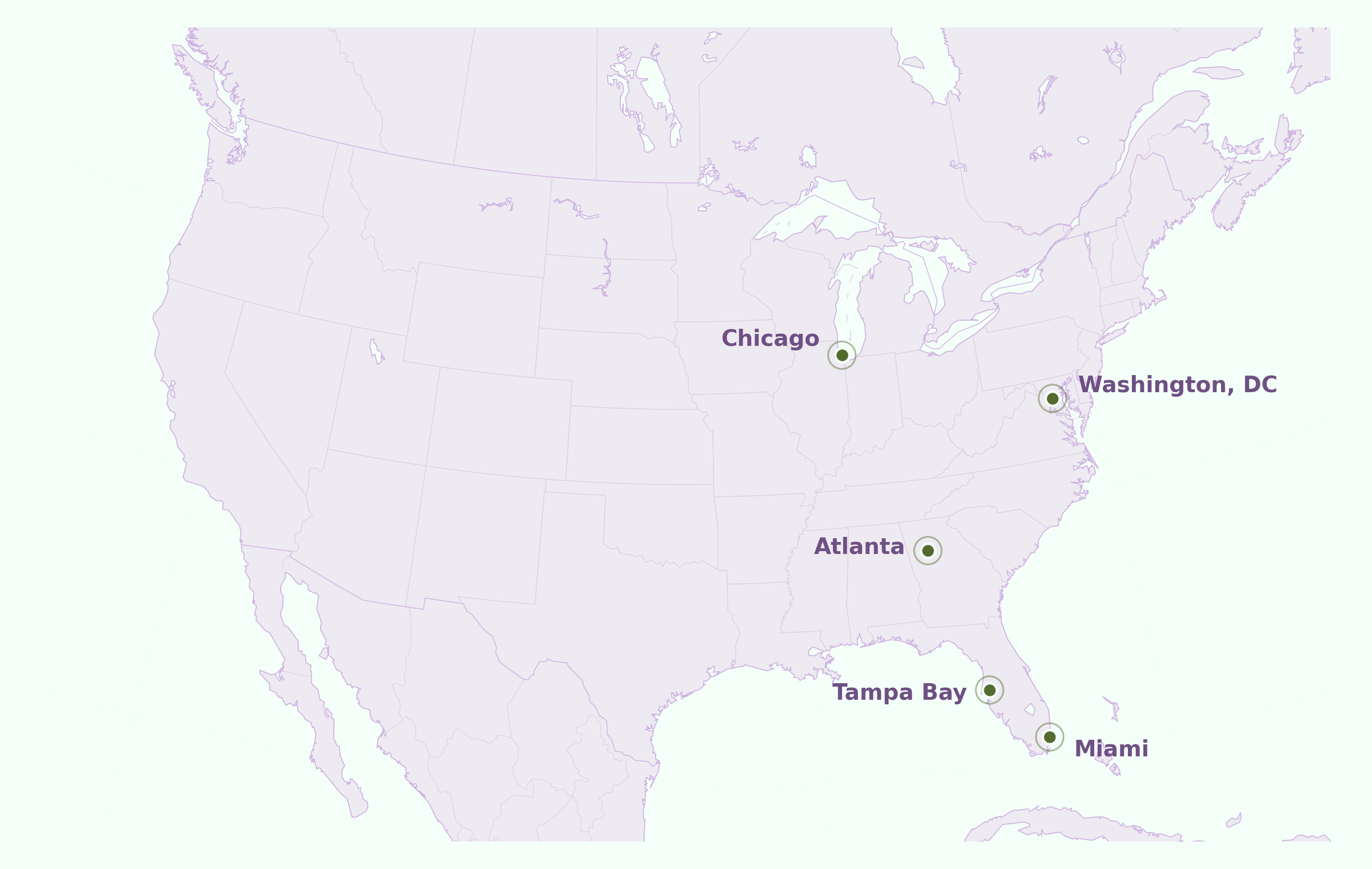
Born and raised in Kraków, Poland, I’ve spent my adult life in the United States — from Atlanta and Miami to Chicago, Washington, DC, and now Tampa Bay. Over the last 18 years, I’ve worked primarily with housing authorities, real estate organizations, and nonprofits.

Where I learned to research, discover, and create
B.A. in Journalism and Social Communication
Jagiellonian University (ranked #1 university in Poland by the U.S. News & World Report)
M.A. in Communication Studies
University of Miami